A dating app where the first date is built in
Tonight turns a match into a planned cinema date — agree on a film and a showtime, buy tickets, all in one flow. A ten-year-old idea I never finished, rebuilt solo in days.

Unfinished business from the past
Ten years ago I co-founded a dating startup. The idea was great — but we made one critical mistake: we got distracted by the social layer instead of doubling down on the dating mechanic itself. Coming back also meant a full redesign — ten years is enough time for any UI to earn one.
Back then, getting the research right alone would have taken days. This time I worked through it in a single day. This case study is that test — take the idea I never finished, and see how far one designer can carry it with AI doing the work that used to take a team.
A match opens a conversation with nothing to talk about. Two people who liked each other's photos are now supposed to invent a reason to keep texting and agree on meeting up — before the chat goes cold, which on most apps it does quickly.
I looked specifically at how Tinder, Bumble, and Badoo handle that moment. All three open an empty chat with no shared task — just small talk. People don't need more matches, they need a reason to talk that comes with something to actually do.
Dating apps don't design for what happens after the match

Claude worked through the full discovery with me as a research partner — structuring the problem, pressure-testing assumptions at each step.
Product brief
Defined the core idea: a dating app where cinema is the icebreaker and the structure of a first date — match → chat → agree on a film and showtime. Mapped what's in scope and what isn't at this stage.
2
Personas
Jake, 24
New York
Action
Fantasy
Sci-Fi
Matches happen on Tinder, but conversations die fast. Doesn't know what to write, gets bored, and ghosts.
Mia, 23
New York
Comedy
Romance
Fantasy
More selective, tired of generic openers, wants a first date with a clear format, public place, defined duration.
3
JTBD
When I'm ready to meet someone new, I want to move from match to a real date fast — so I stop wasting time on dead-end conversations.
Around that, a few smaller but equally important needs:
1
A natural icebreaker after a match
2
Agree on a date format without awkward negotiation
3
Shared taste signals to feel confident about a match
4
Flexible ticket options at the end of the flow
4
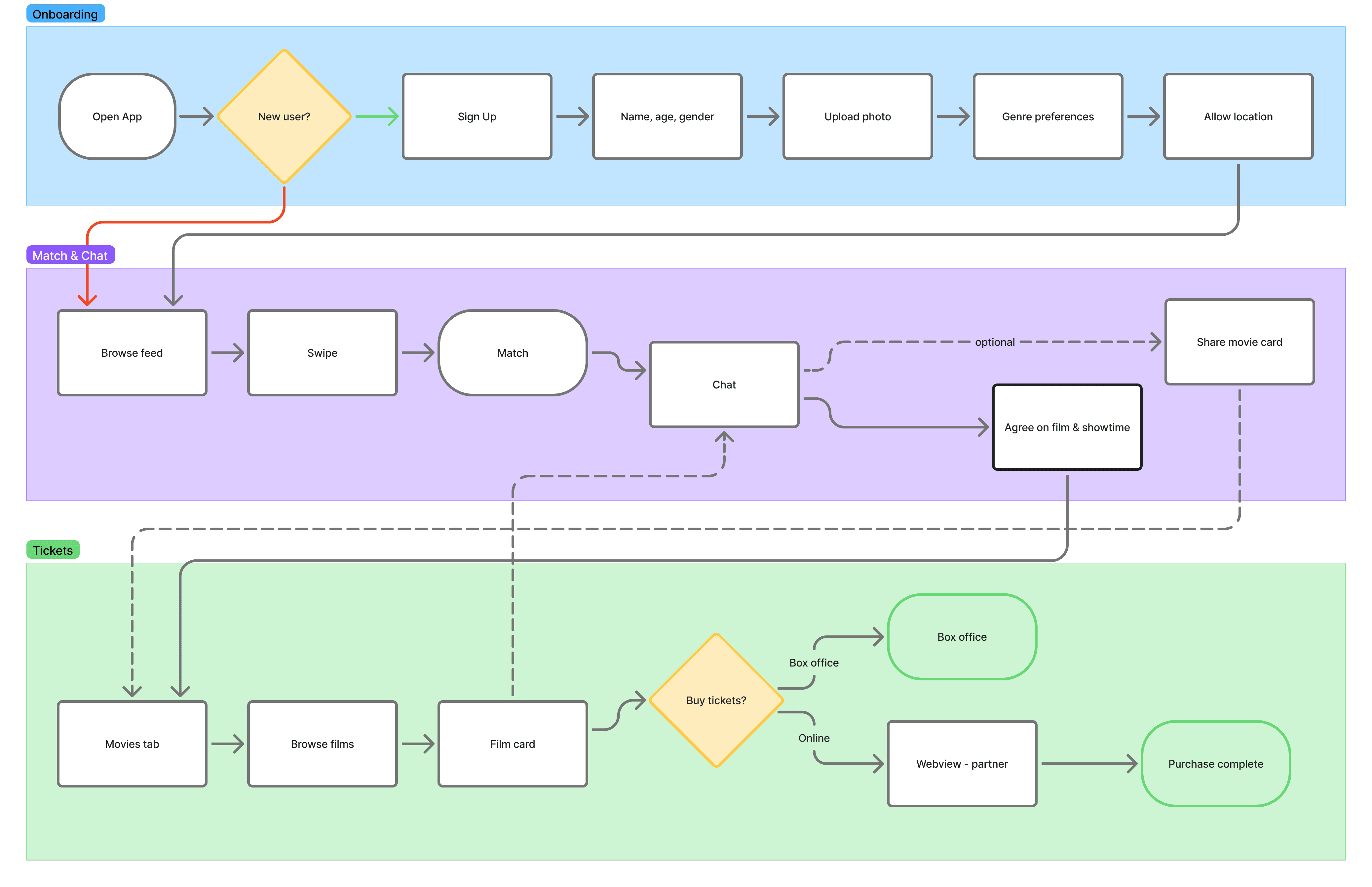
User flow
Three main scenarios end-to-end:
↓ Onboarding
↓ Match & Chat
↓ Movies & Tickets
1
Visual direction
Before touching Figma I leaned on ChatGPT for mood boards and reference pulls — a handful of directions I tried and dropped before landing on the dark, neon-lit cinema look. Comparing alternatives fast enough to second-guess my own first instinct.

Mood board created with ChatGPT
2
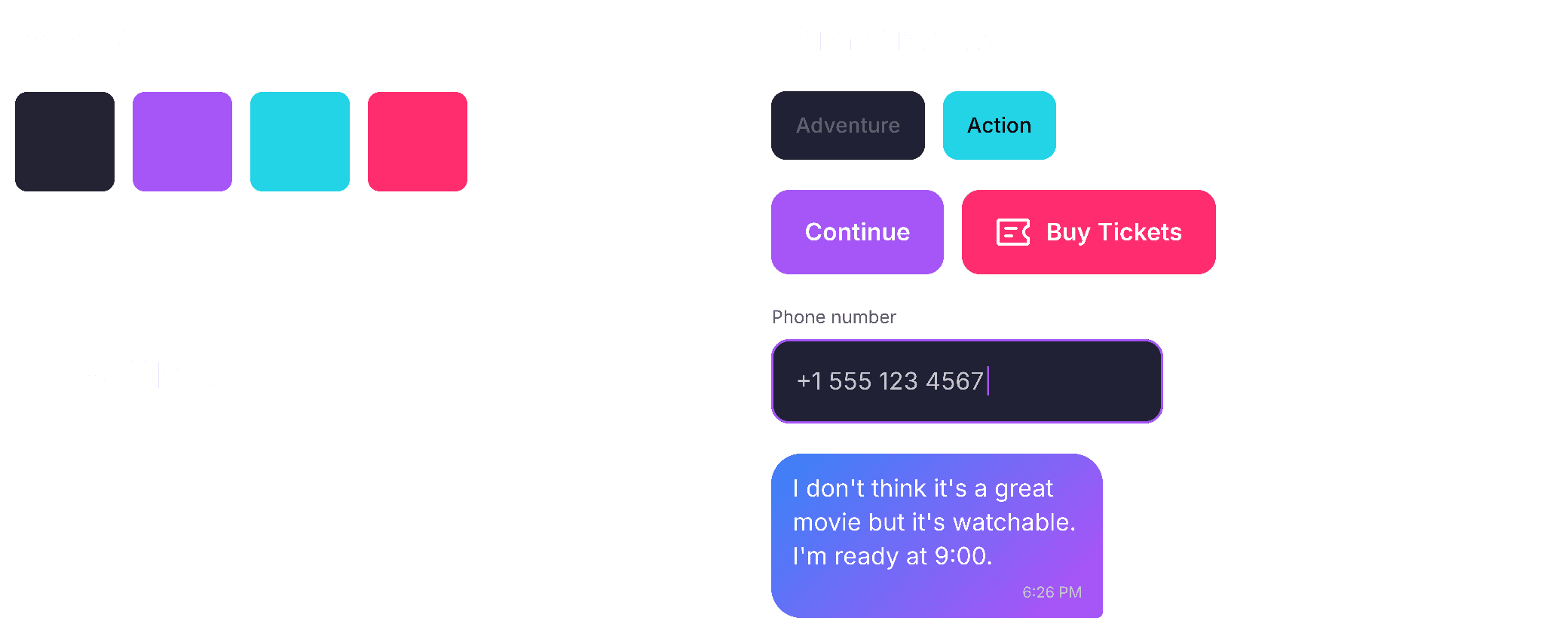
Design system
Before touching Figma I leaned on ChatGPT for mood boards and reference pulls — a handful of directions I tried and dropped before landing on the dark, neon-lit cinema look. Comparing alternatives fast enough to second-guess my own first instinct.
3
Onboarding
The job here is narrow: collect just enough to make matching meaningful, with as little friction as possible. Genre and mood preferences double as a taste signal shown later on every match card.

4
Feed & Match
Swiping is the part every dating app already gets right, so I kept it familiar instead of reinventing it: like/pass gestures, a visible compatibility percentage based on shared genre and mood tags.

5
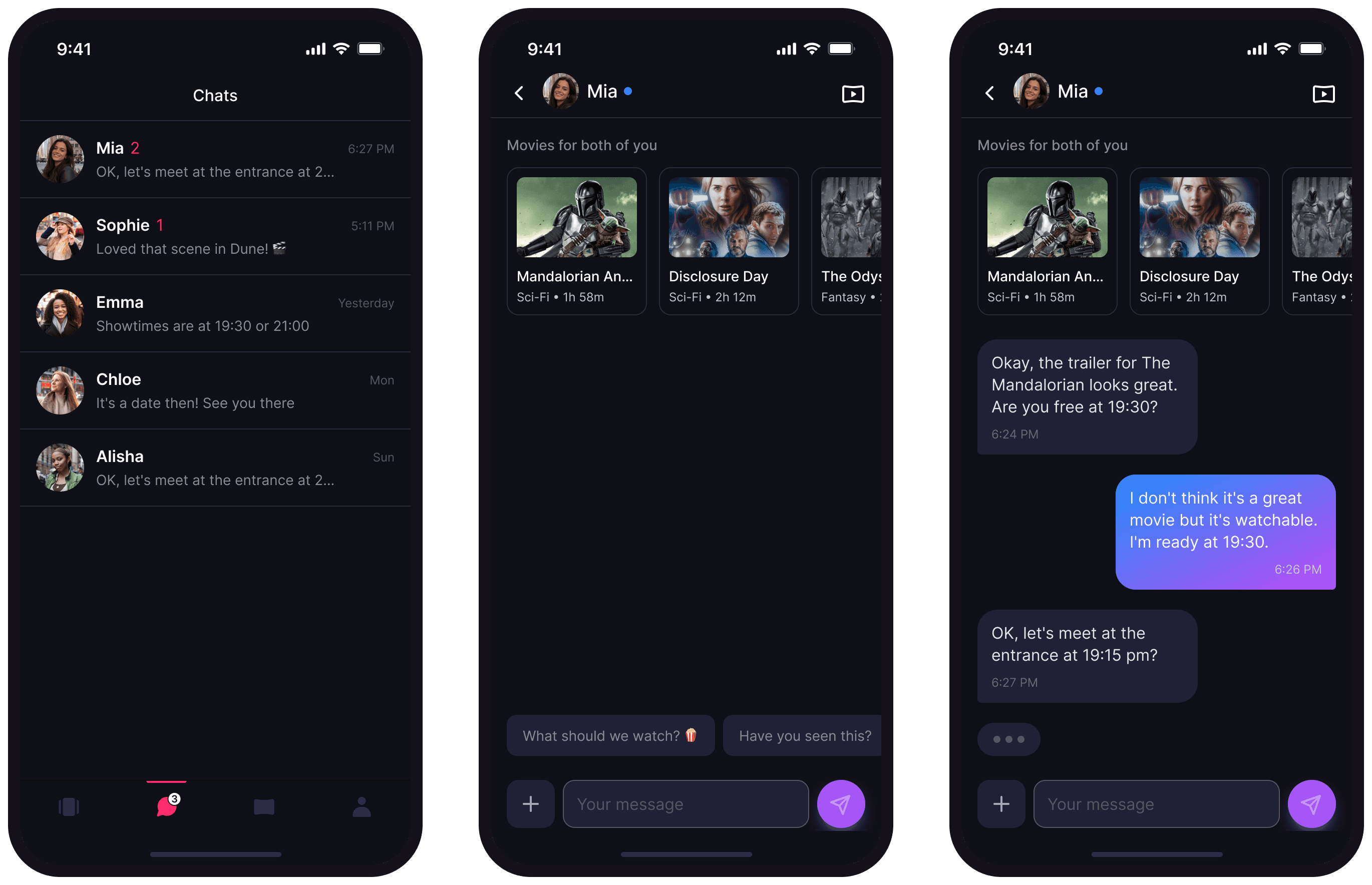
Chat — where the dates are planned
The chat isn't just messaging — it's where "Suggest a Movie" surfaces showtimes inline, so agreeing on a film takes one tap instead of a back-and-forth.
6
Movies & Tickets
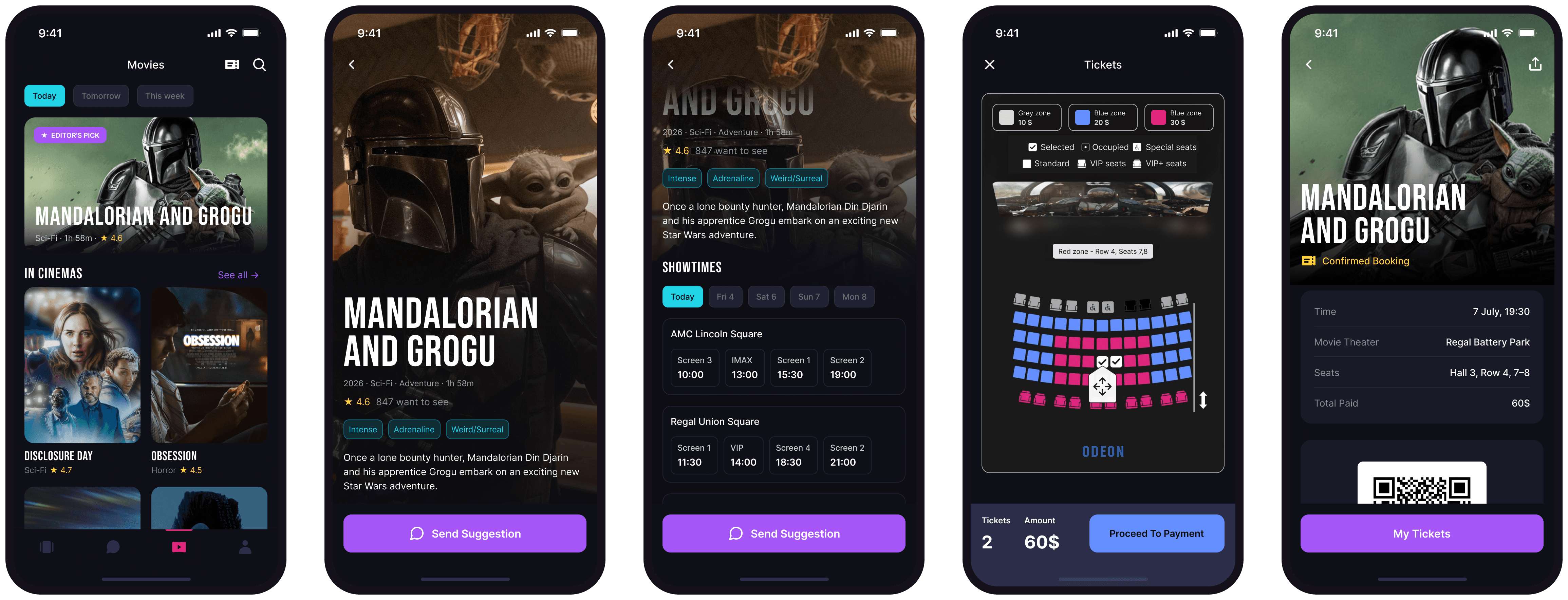
The Movies section — accessible via the cinema icon in the nav bar — shows the current repertoire ranked by shared compatibility: genre and mood overlap with your match, not generic popularity. Tapping a film opens a detail screen with the synopsis and showtimes, with two actions: send the film as a suggestion into the chat, or buy tickets directly. Tapping a showtime on the film detail screen triggers the ticket purchase flow.
Ticket purchase hands off to a ticketing partner — seat selection and payment happen on their side, keeping Tonight out of the transaction complexity while still bringing the confirmed tickets back into the app.
Ten years ago, this would have taken a team and several weeks
This time I was the researcher, the art director, the UI designer, and the person who made it interactive, all in one continuous thread of work, over days instead of months. I don't think AI replaced a team here — what it did was widen what one designer can reach alone.
What I'd still want to validate: this is a concept project. There are no real users and no real conversion numbers, and I'm not going to make any up. The next step is getting it in front of real users.