Internal task manager
Tasks for a whole retail network: sent from the office, done in the store. The feature is part of two bigger products, the company’s web operations platform and the team’s mobile app.


02
Planning at scale
One task can go out to many stores at once, so the web form is built for that.
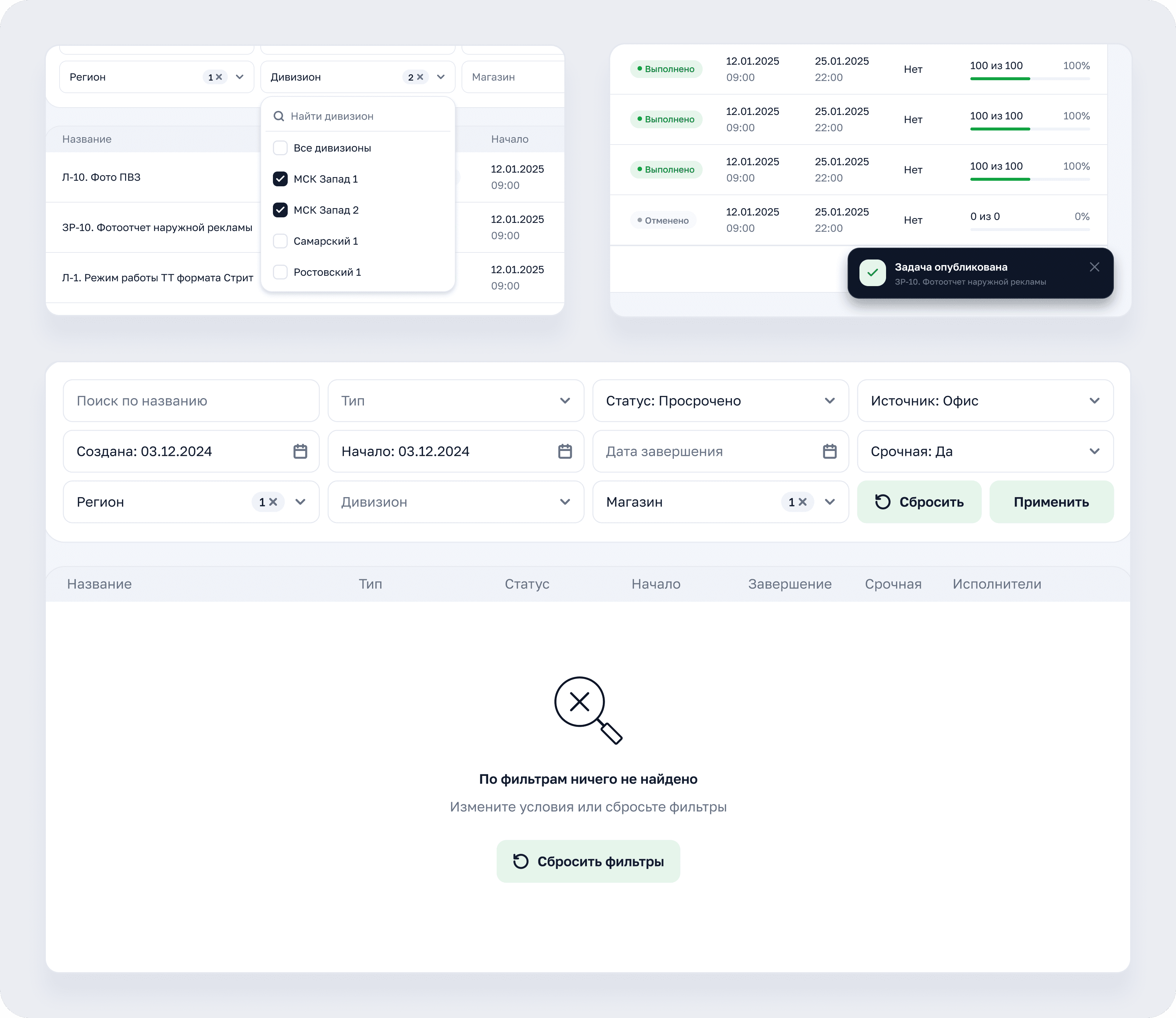
There are two ways to choose who does it, and they work the same on web and mobile. Most tasks go to job positions: pick the regions and stores, then the positions that should take it. A store director can simply pick their own people by name. Observers and reviewers can join too, and everyone gets a push the moment the task is published. Repeat tasks can be copied, not rebuilt.
Back in the list, each task shows how far along it is, and filters take you straight to the stores you care about.

03
Control without micromanagement
When one task runs across many stores, a manager needs the big picture first and the details only when something is off.
The task page has three tabs. Parameters shows how the task was set up. Assignees lists everyone who got it, with their status, so it’s easy to see who’s done and who’s behind. Change history shows who changed what, and when.
Copying, exporting to Excel or taking a task down is one click away — and taking it down asks first.


04
On the go
On the phone, the same task is something to do right now.
The employee gets a push, opens the task, reads what’s needed and accepts it. Questions go to the author right in the task chat, where everyone also sees each status change. When the work is done, they write a report, attach photos and send it for review.
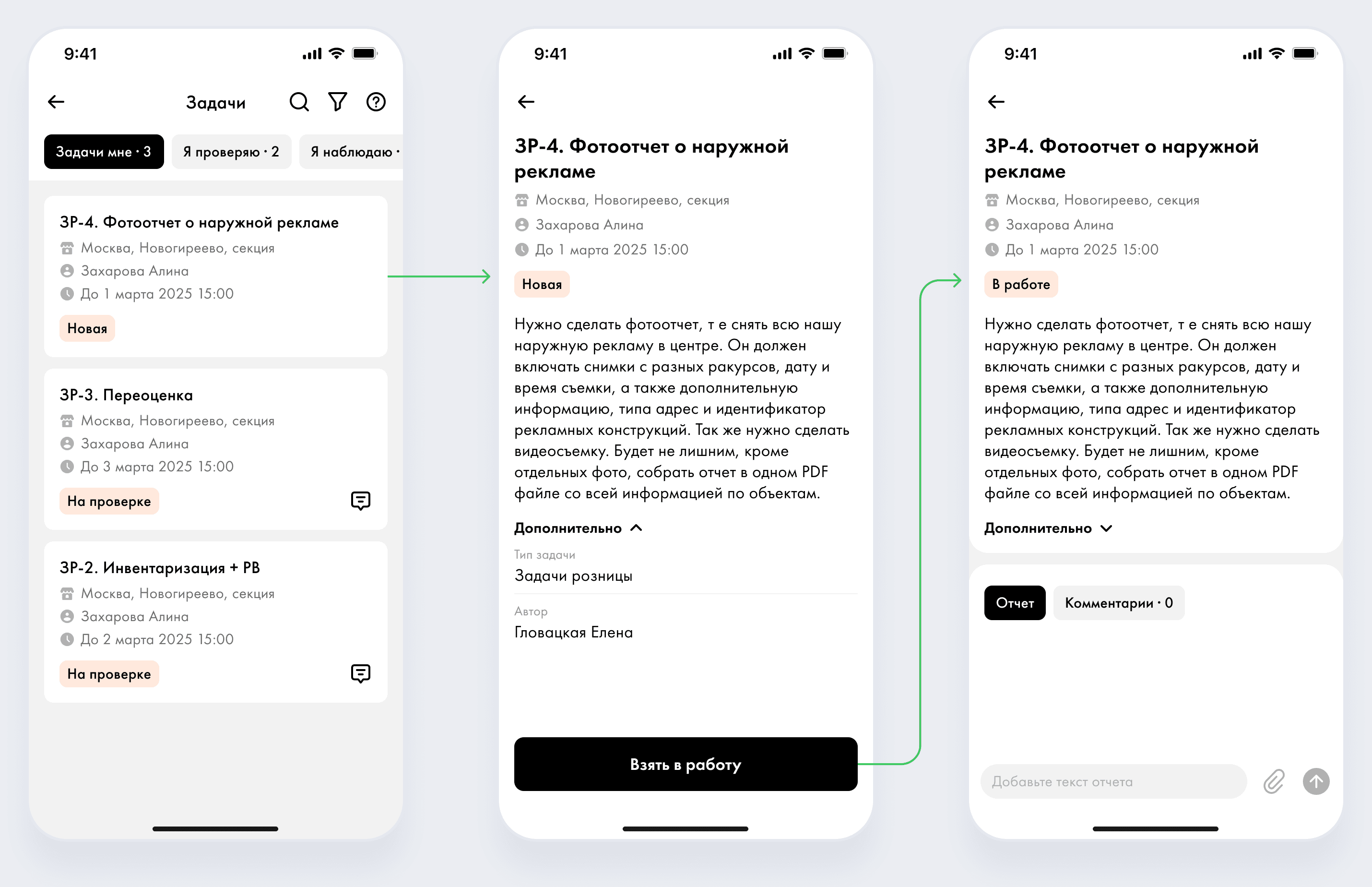
Task viewing and commenting flows

05
Unified status model
A task can start on one platform and finish on the other: created on the web, done on a phone, reviewed wherever the manager happens to be.
If the report isn’t good enough, the manager sends the task back with a comment. If it is, they mark it done. Either way, everyone sees what happened — in the task chat on the phone and in the change history on the web. On the web, a manager can also open anyone’s report right from the Assignees list.


Outcome
I designed both platforms down to the edge cases and error states, so the team could build them without guessing.
We launched the tool on web and mobile at the same time, turning a complicated multi-store routine into something people can simply use.